
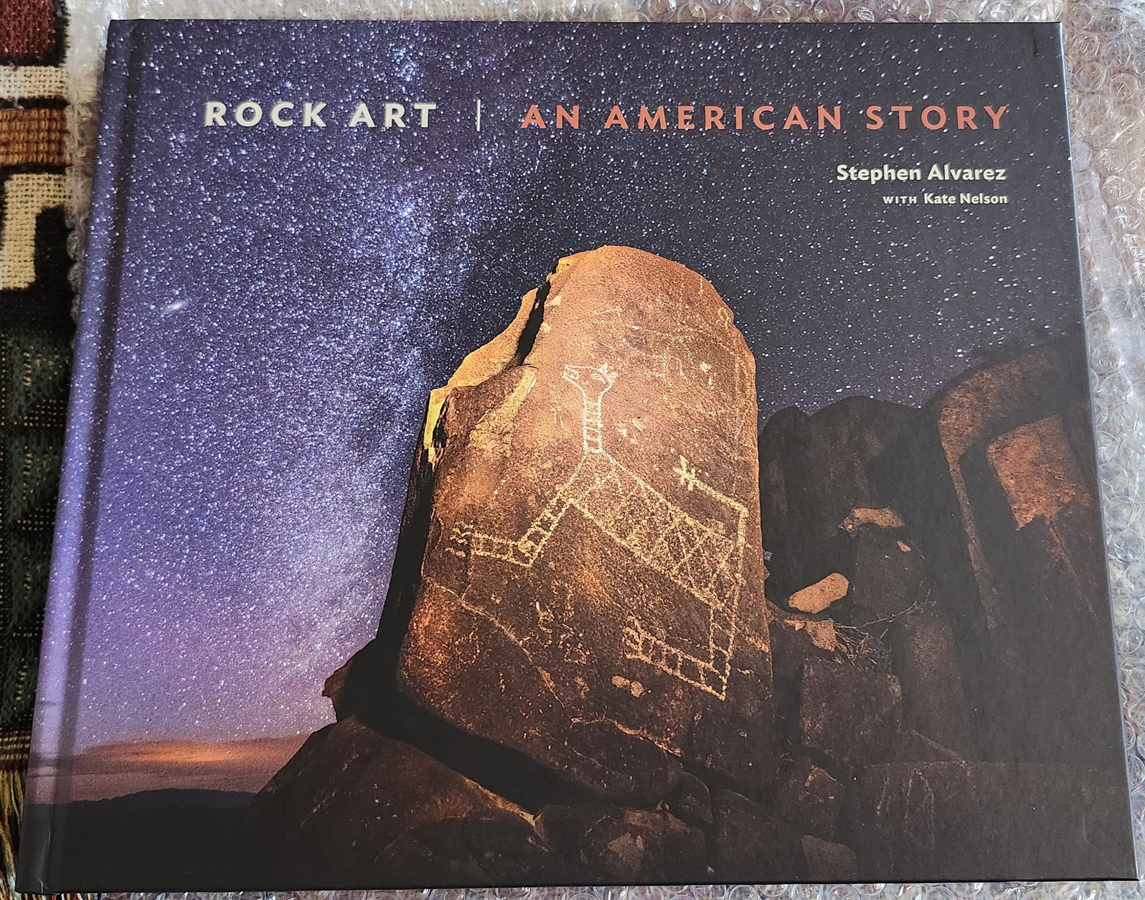
The following short essay is one I recently contributed to the coffee table book, “Rock Art: An American Story”, which features a selection of awe-inspiring images from photojournalist Stephen Alvarez, along with a number of essays from Indigenous authors and advocates.
The photos and words do much to instill a sense of respect and reverence for our connections to the ancestral past. Many Thanks to Stephen, Editor Kate Nelson, and the rest of the team for the opportunity to be a part of something so cool! Kwah-kway!
“Infused with insights from Native American tribal members and archaeologists specializing in rock art, the book unites high-resolution images with essays that add context, meaning, and voice.”
This 160-page book is now available to order at the link here –> Rock Art | An American Story » Ancient Art Archive
All proceeds benefit the Ancient Art Archive, a non-profit organization that “identifies and preserves culturally significant works using sophisticated photography, 3D modeling, and virtual reality technology. We meticulously record each piece in a way that captures its power and beauty.”
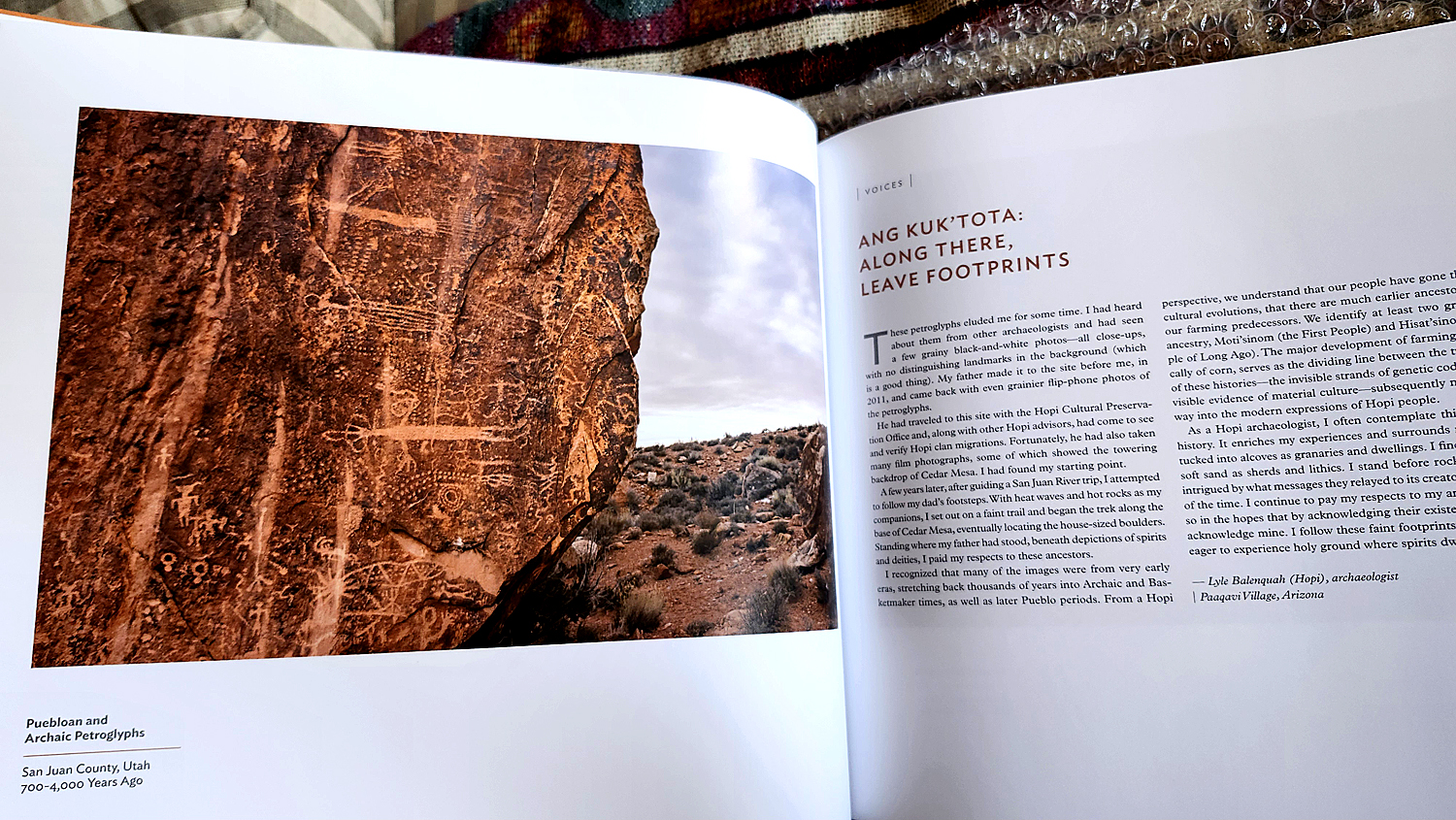
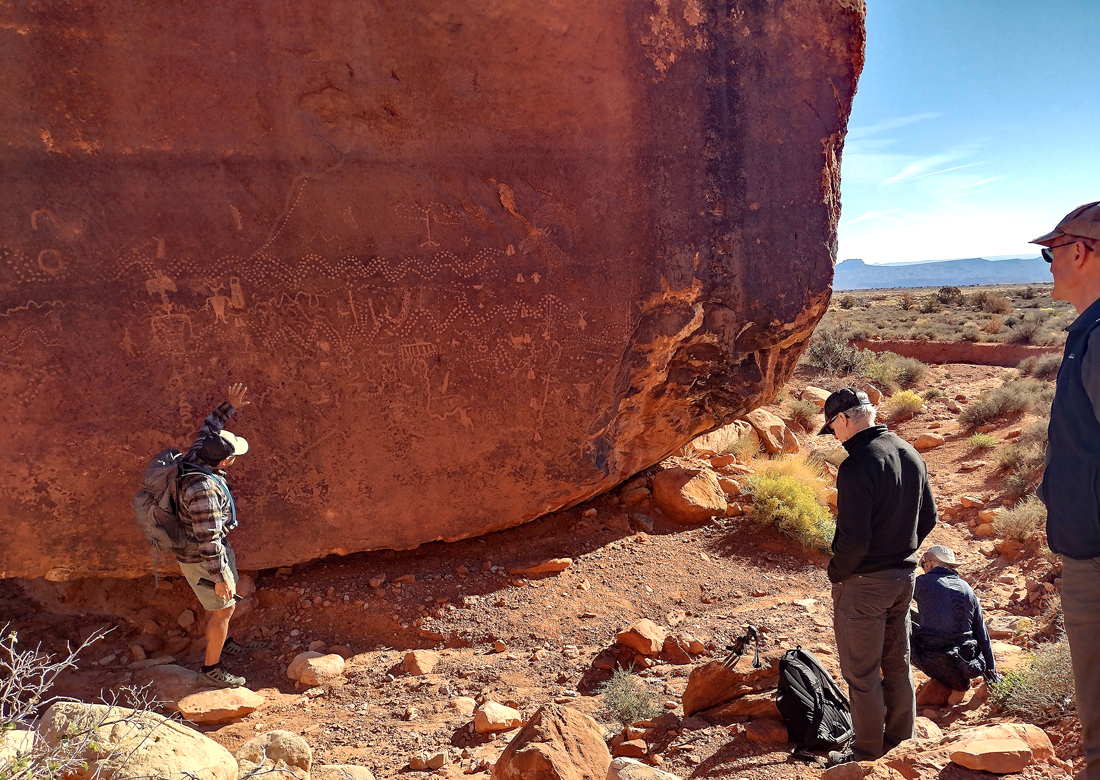
This specific set of petroglyphs eluded me for some time. I had heard about them from other archaeologists, and was shown a few grainy black and white photos; all close-ups, with no distinguishing landmarks in the background (which is a good thing). It wasn’t until the summer of 2011 that I got my first clue as to its location, when my father beat me to the site, and came back with even grainer flip-phone photos of these enigmatic figures.
He had traveled to this place with the Hopi Cultural Preservation Office, and along with other Hopi Advisors, they had come to see and verify Hopi clan migrations. Fortunately, he had also taken many film photographs, and some clearly showed the towering backdrop of Cedar Mesa. I had found my starting point!
A few years later, after guiding a San Juan River trip, I attempted to follow my dad’s footsteps. With heat waves and hot rocks as my companions, I set out on a faint trail and began the trek along the base of Cedar Mesa, eventually locating the house-sized boulders. Standing where my father had stood, beneath depictions of spirits and deities, I paid my respects to these ancestors.
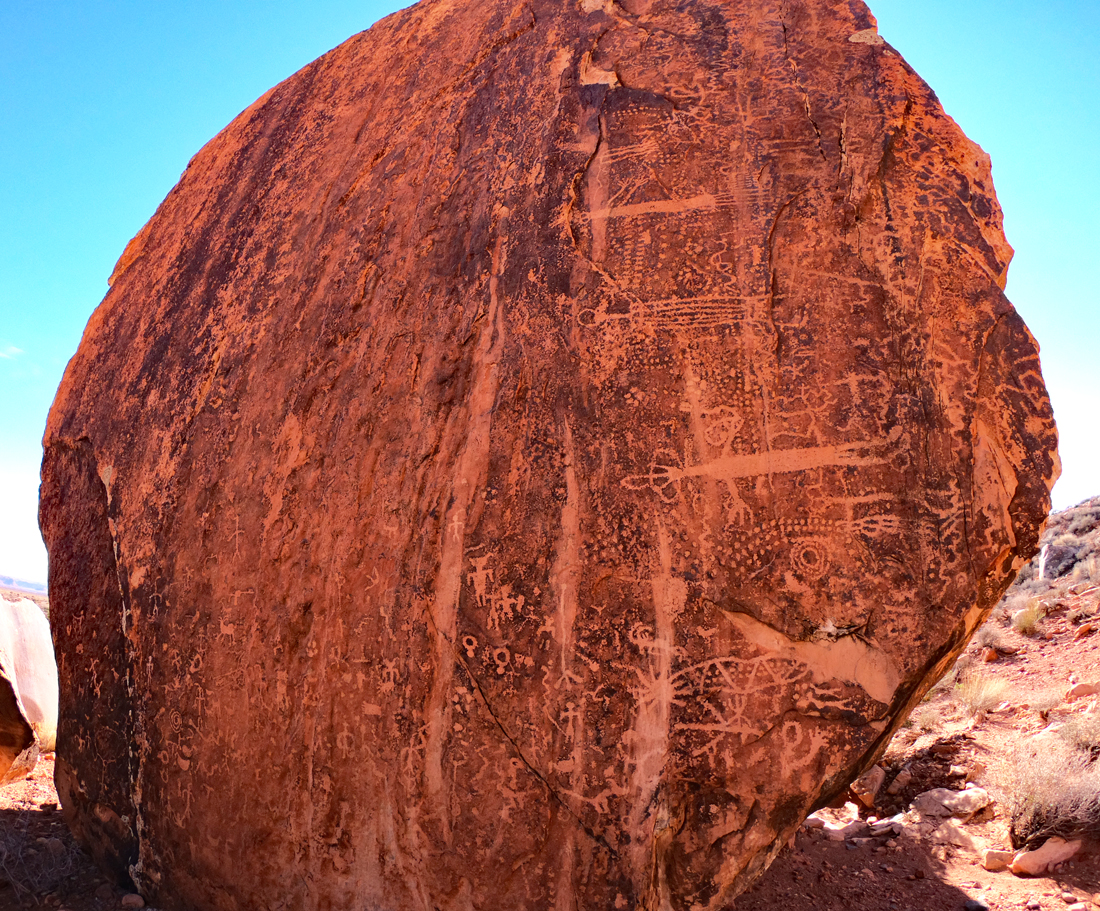
I recognized that many of the images were from very early eras, stretching back thousands of years into “Archaic” and “Basketmaker” times, as well as later “Pueblo” periods. From a Hopi perspective, we also recognize that our people have gone through cultural “evolutions”, that there are much earlier ancestors than our farming predecessors. Hopi identifies at least two groups of ancestry, Moti’sinom (the First People) and Hisat’sinom (People of Long Ago), with the major development of farming, specifically of corn, being the dividing line between the two. Parts of these histories, the invisible strands of genetic code, and the visible evidence of material culture, subsequently made their way into the modern expressions of Hopi people.
As a Hopi archaeologist, I often contemplate this ancestral history. It enriches my experiences and surrounds me. I see it tucked into alcoves as granaries and dwellings. I find it lying on soft sand as sherds and lithics. I stand before rock art panels, intrigued by what messages it relayed to its creator and people of the time. I continue to pay my respects to my ancestors. I do so in the hopes that by acknowledging their existence, they will acknowledge mine. I follow these faint “footprints” back in time, eager to experience holy ground, where spirits of ancestors dwell.


Wonderful essay Lyle. I’ve ordered this book. Looking at your collection of photos taken over the years, I think they would make a fine book along with your thoughtful insights and perspectives. On a side note, do you still guide river trips?
LikeLiked by 1 person
Thank you for the comment and for ordering the book! We appreciate your support! I have often thought about producing my own book, and that may be in the works soon!
Again, Kwah-kwah! Thank You!
LikeLike
And yes, I still guide on the San Juan mostly! If you are interested, please let me know! Thank You Again!
LikeLike